Recording Studio vs Rehearsal Room: Which One Should Your Band Book in Manchester?

Booking the right space can make a big difference to your band’s progress. A rehearsal room gives you the freedom to play, experiment and tighten your songs. A recording studio gives you the tools and environment to capture a performance properly.
But which one should you book in Manchester?
The simple answer is this:
Book a rehearsal room when you are developing songs, preparing for a show or improving as a live band.
Book a recording studio when your arrangements are ready and you want to create a demo, single, EP or other finished recording.
If you are somewhere in between, book a rehearsal session first. It can help you find out whether your material is ready for the studio.
Whether you are searching for a rehearsal studio near me, a recording studio Manchester musicians can use, or a flexible creative space for your next project, this guide will help you choose with confidence.
The main difference between a rehearsal room and a recording studio
A rehearsal room is built for repetition. You can play the same song several times, stop to solve problems, change an arrangement and try again.
A recording studio is built for capture. The aim is usually to record the strongest possible performance, with careful attention to sound, timing, microphones, editing and the final result.
That does not mean you cannot record in a rehearsal room, or rehearse in a recording studio. Many modern music spaces are flexible. The important question is not simply, “Which room is better?”
It is:
What does your band need to achieve during this session?
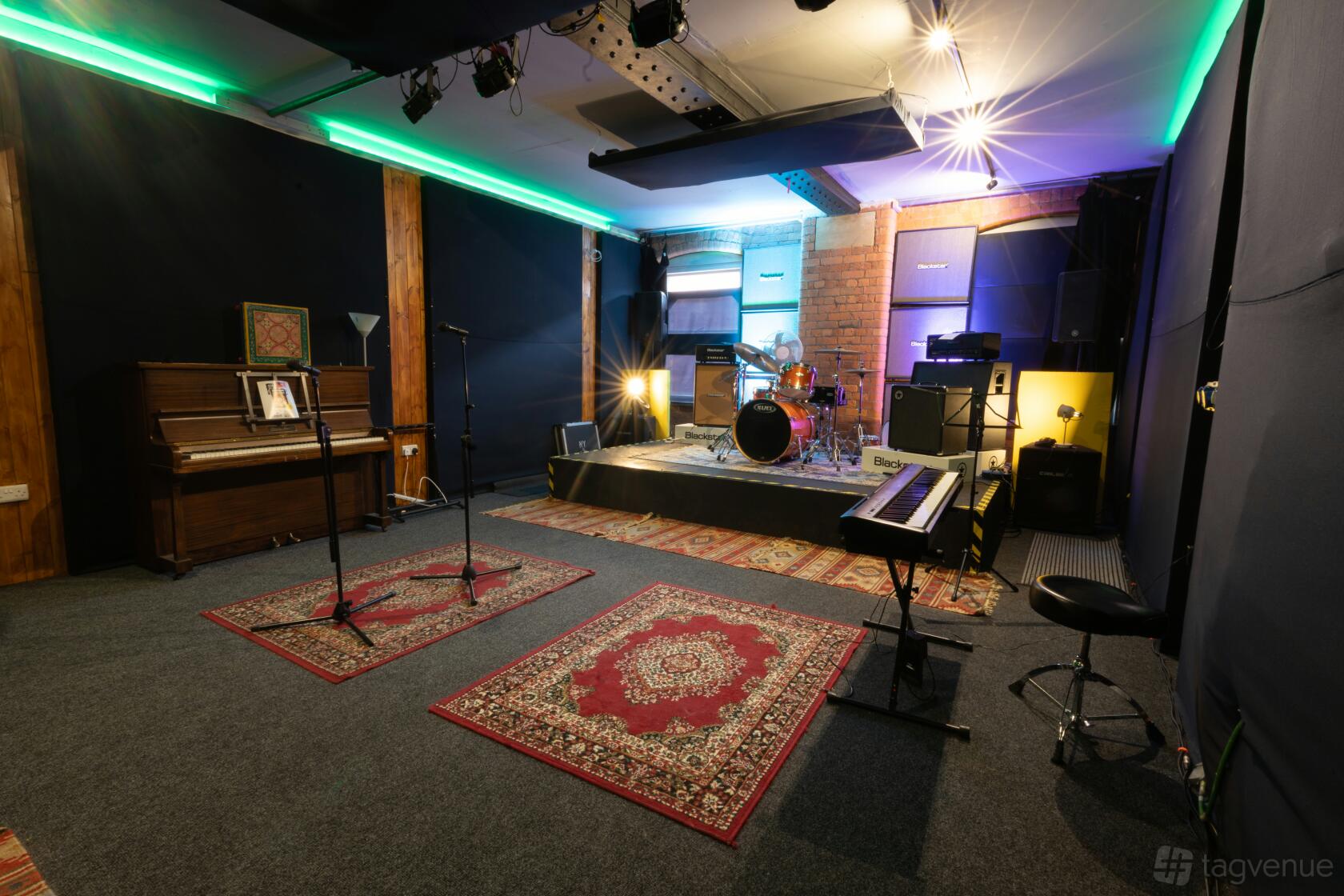
At Habitat Studios, musicians can find practical spaces for rehearsals, recording and collaboration in Manchester. The available rooms include rehearsal spaces with instruments, amps, microphones and PA equipment, subject to the details of the room and booking.
When should your band book a rehearsal room?
A rehearsal room is usually the best choice when the music is still being shaped or your band needs to become tighter.
1. You are writing or arranging songs
If you are still deciding on a chorus, bridge, ending, harmony or guitar part, a rehearsal room gives you space to experiment.
Writing together is often more productive when everyone is in the same room. You can hear how the instruments work together, test different dynamics and make decisions as a band.
There is also less pressure than in a recording session. You do not need to worry about capturing every take perfectly while the clock is running.
2. You are preparing for a live performance
A rehearsal room is the right choice when you need to run through your set, practise transitions or build confidence playing together.
This is especially useful for bands with a show approaching, but it also matters if you are preparing for a showcase, audition, support slot or promoter meeting.
Look for a music rehearsal space where everyone can hear each other clearly. If you are searching for rehearsal rooms with PA system or a rehearsal studio with backline, check the current room listing before booking so you know what is included.
3. You need to test new material
A song can sound exciting in a bedroom or home demo but feel different when the whole band plays it at volume.
A rehearsal room lets you test whether the structure works, whether the vocal sits comfortably and whether each musician has a clear role. You can also record a simple reference if the space allows it, giving you something to review after the session.
4. You are not ready to record
Recording can reveal small weaknesses in timing, arrangement and performance. That is useful, but it can also make an expensive session feel stressful if the band is not prepared.
If you are still stopping frequently, changing the arrangement or learning parts, choose a rehearsal room. A few focused sessions can help you arrive at the recording studio with clear decisions already made.
When should your band book a recording studio?
A recording studio makes sense when you know what you want to record and are ready to focus on the performance.
1. You need a professional demo or release
If the recording will be sent to promoters, booking agents, management, labels or potential collaborators, sound quality matters.
A dedicated recording studio is designed to capture instruments and vocals with more control than a standard practice room. Depending on the studio, you may also have access to an engineer, production support, editing, mixing or mastering.
Always confirm exactly what is included in your booking. Not every recording studio offers the same service.
2. Your songs are arranged and rehearsed
Before booking, make sure the band agrees on:
Song structures
Tempos
Intros and endings
Vocal harmonies
Guitar and keyboard parts
Solo sections
Whether you will play to a click track
The more decisions you make before the session, the more time you can spend recording strong takes.
3. You want to capture the band’s identity
Recording is not only about technical quality. It is also about capturing what makes your band sound like your band.
Some groups want to play live together to keep the energy of a rehearsal. Others prefer to record instruments separately so each part can be edited and refined. Talk to the studio before booking and explain the sound and feel you want.
If you are comparing a recording studio Manchester options list, ask whether the space suits live tracking, overdubs, vocals, production or a combination of these.
4. You are creating content for a wider project
A recording session may be part of a larger plan: an EP, an artist press kit, a video, a launch campaign or a submission to a label.
In that situation, think beyond the room itself. You may need time for setup, multiple takes, editing and reviewing files. Ask the studio how the session is organised and what you receive afterwards.
What does a rehearsal room usually offer?
A professional rehearsal room is designed to help a band start playing quickly.
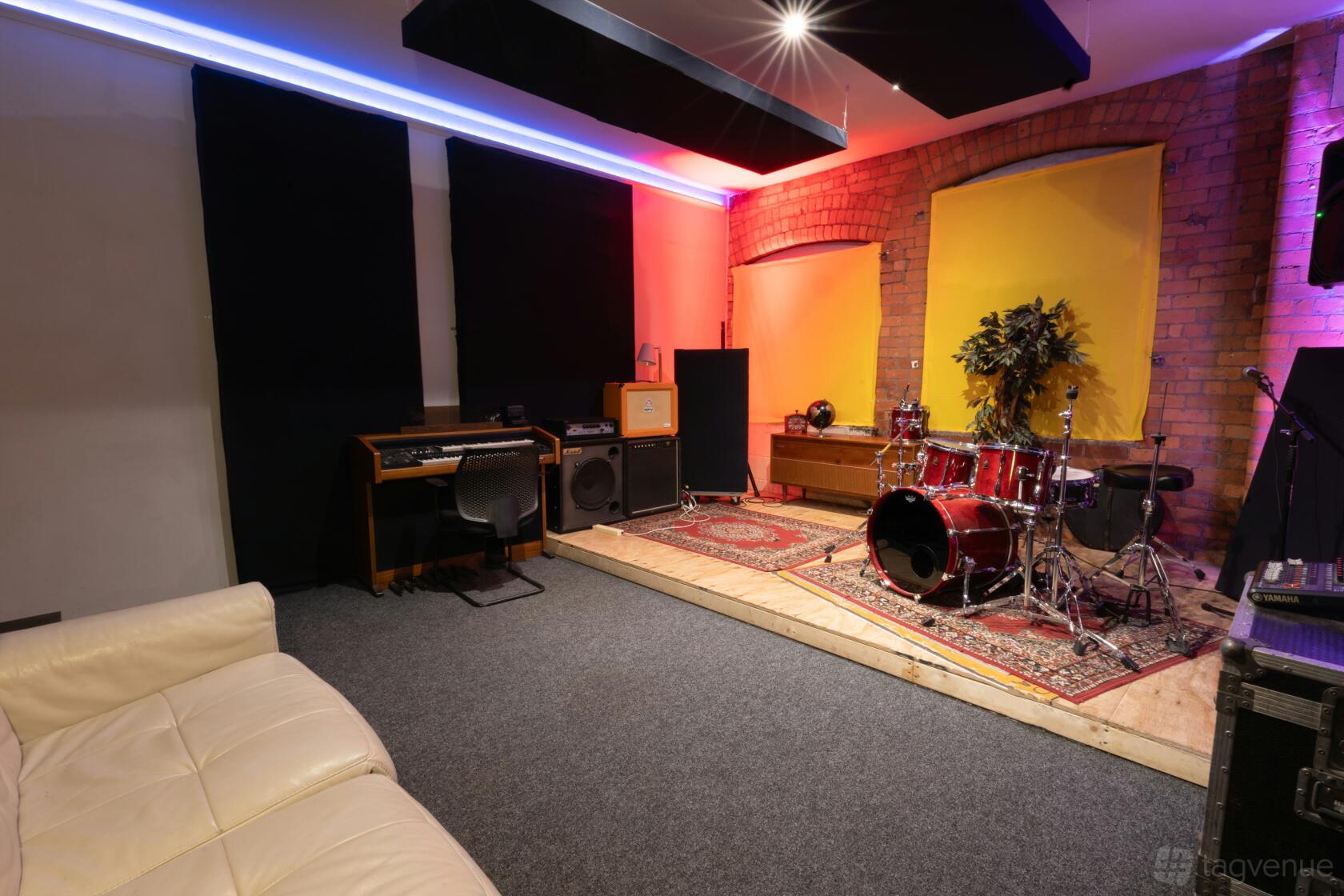
Depending on the room, you may find:
A drum kit or drum hardware
Guitar and bass amplifiers
Microphones
A PA system
Music speakers
Instruments or keyboards
Acoustic treatment
Space for cases and personal equipment
For example, Habitat Studios lists rooms such as Studio 1, Studio 2 and Studio 3. Each room has its own layout and equipment details, so check the relevant listing before you book.
This is useful if you are looking for band rehearsal space near me, rehearsal studio Manchester musicians can access, or band practice room hire without bringing every piece of equipment with you.
How to prepare for a rehearsal room booking
A rehearsal session works best when the band has one clear goal.
Instead of simply saying, “We will practise,” decide what you want to achieve. For example:
Tighten three songs
Arrange a new chorus
Run a complete set
Work on vocal harmonies
Test a new member’s parts
Prepare a short demo
Identify which songs are ready to record
Share the plan with the band before the session. Bring lyric sheets, chord charts or set lists where useful. It is also sensible to check whether you need to bring personal items such as cymbals, a snare, pedals, leads or a preferred microphone.
If you are booking a rehearsal space for bands, confirm:
The number of musicians using the room
The equipment provided
Whether the PA is suitable for your vocal setup
Whether you can bring additional equipment
The minimum booking period
How recording or photography is handled
These details can vary between rooms, even within the same building.
How to prepare for a recording studio booking
A recording session deserves a little more planning.
Before you book, create rough recordings of the songs at home or in a rehearsal room. They do not need to sound polished. Their purpose is to help the band and studio understand the arrangement.
You should also prepare:
Final lyrics
Chord charts
Tempo information
Reference tracks
A list of songs in recording order
Notes about important sounds or performances
Any click tracks or backing tracks
A clear idea of how you want the finished recording to be used
Speak to the studio in advance about the number of musicians, instruments, songs and expected outcome. Ask whether an engineer is included, how files are delivered and whether mixing or mastering is available separately.
A short conversation before booking can prevent confusion on the day.

Could you use both spaces?
For many bands, the best approach is to use both.
You might book a rehearsal room to:
Write and arrange the songs
Practise the parts
Test the set or recording arrangements
Make rough reference recordings
Book the recording studio once the material is ready
This gives each session a clear purpose. The rehearsal room is where the music develops. The recording studio is where you preserve the finished performance.
Some creative spaces support both stages, which can make the process feel more familiar. If you are considering a combined option, ask whether the same room, equipment or team is available for both rehearsal and recording.
The final decision
Choose a rehearsal room if your band needs to develop, practise or test music.
Choose a recording studio if your arrangements are settled and you are ready to create a polished recording.
If you are still unsure, start with a rehearsal booking. It is a practical way to understand what your band needs before committing to a recording session.
The best rehearsal room hire Manchester option is not always the biggest or most advanced space. It is the room that supports your goal, your lineup and the way your band works. Likewise, the right recording studio is the one that understands the project and can help you make the most of your time.
For room options and current booking information, visit the Habitat Studios listing or contact the team through Instagram.
Comments