From Rehearsal Room to Stage: Preparing Your Band for a Manchester Gig

A good gig starts long before your band walks on stage. The songs need to be tight, but that is only part of the preparation. You also need a setlist that works, transitions that feel natural, vocals that cut through the mix, and a clear plan for soundcheck.
The best way to prepare is to make your rehearsal feel as close to the real show as possible. Whether you are playing a small Manchester bar, a support slot, an originals night or a larger club show, focused rehearsal time can help your band arrive feeling calm and ready.
At Habitat Studios in Ardwick, Manchester, bands can use three practical rehearsal rooms with professional backline, PA systems, microphones, amps and drum kits. It is a welcoming music rehearsal space for artists who want to work seriously without losing the social side of making music.
Here is how to turn your next rehearsal into a proper gig-preparation session.
1. Confirm the details of the show first
Before you build your set, make sure you know exactly what you are preparing for.
Ask the promoter or venue to confirm:
Your total set length
Load-in and soundcheck times
The stage size
Whether a drum kit or amps are provided
Whether the venue has an in-house engineer
How long the changeover will be
The running order and curfew
Whether backing tracks, samples or other equipment are allowed
A 30-minute support slot needs a different approach from a 60-minute headline set. You do not want to arrive with too many songs, or discover during soundcheck that your usual setup will not fit on the stage.
Once the details are confirmed, share them with everyone in the band. A simple group message or shared document can prevent confusion later.
2. Build a setlist with an energy arc
Choosing songs for a live set is not the same as choosing songs for a rehearsal. A rehearsal might focus on difficult material. A gig set needs to take the audience on a journey.
Start by listing the songs your band can currently play with confidence. Then consider:
Which song makes the strongest opener?
Where does the set naturally build?
Which songs give the vocalist time to recover?
Are there too many slow songs together?
Which track should be the closer?
Do the song keys, tunings and instrument changes make sense in this order?
Your opener should be immediate and reliable. It does not have to be your most complicated song. In fact, a song that gets everyone playing together quickly is often a better choice when nerves are high.
Try to create a simple energy arc:
Start with confidence and movement.
Build through the first few songs.
Give the audience a change of pace in the middle.
Build towards your strongest final section.
Finish with a song that leaves people wanting more.
Remember to time the set. Add together the length of every song and include space for tuning, talking and transitions. It is usually better to finish slightly early than to run over your slot.
For more guidance on organising a live set, the Berklee setlist guide is a useful resource.
3. Rehearse the transitions, not just the songs
Many bands practise every song separately but rarely practise what happens between them. That can create long pauses, uncertain count-ins and awkward tuning moments on stage.
Spend time working out:
Who counts in each song
Who speaks to the audience
Which songs run directly into each other
Where guitar or bass changes happen
How long tuning should take
Who gives the cue for a stop or ending
What happens if a member misses a cue
You can write short notes on the setlist. For example:
“Drummer count-in”
“Guitar change to drop D”
“Go straight into next song”
“Singer speaks after chorus”
“Quiet intro : no talking”
Use simple, visible cues that everyone understands. A nod, raised drumstick or clear look across the room can be enough.
If a song ends with a long pause before the next one, decide whether that silence is intentional. There is a difference between creating atmosphere and looking unsure about what comes next.
4. Use the PA to balance the vocals
A band can sound tight in a room and still struggle on stage if the vocals are not balanced properly. This is why rehearsing through a PA matters.
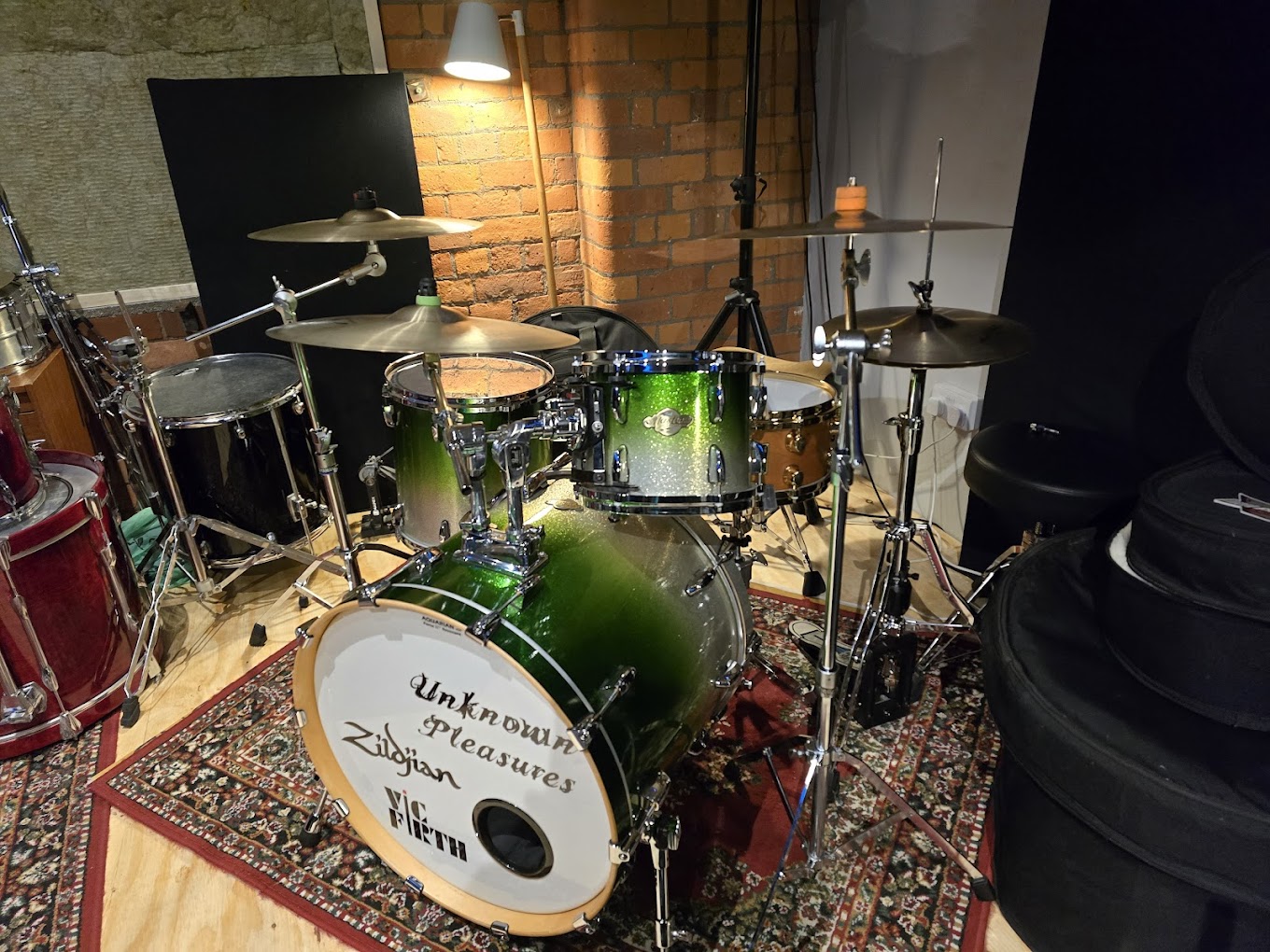
When looking for a rehearsal studio with backline, check what is included. At Habitat Studios, the rooms include professional equipment such as microphones, amps and drum kits, helping bands rehearse with a setup that feels closer to a live environment.
During rehearsal, make sure the lead vocal is clear without being too loud. The instruments should support the vocal rather than compete with it. Pay particular attention to:
Guitar amp volume
Bass frequencies
Cymbal levels
Backing vocal balance
Quiet sections and loud choruses
Microphone technique
Ask the vocalist to practise moving slightly closer to the microphone for quieter lines and controlling their distance during louder sections. Backing singers should also know exactly when to sing and how prominently they should sit in the arrangement.
Do not only test the loudest part of a song. Run a quiet verse, a full chorus and any section where the arrangement changes dramatically. These dynamics are important for both the audience and the sound engineer.
If your band normally searches for a “rehearsal studio near me” or a “band rehearsal space near me,” prioritise a room where you can hear the full vocal and instrument mix clearly. Good monitoring during practice will make it easier to communicate with a live engineer later.
5. Run a realistic soundcheck rehearsal
A soundcheck is not the time to play the entire set. It is a short technical check designed to help everyone understand the stage setup.
You can practise the process in your rehearsal room.
Start by preparing a basic input list:
Lead vocal
Backing vocals
Kick drum
Snare
Other drum channels if required
Bass
Guitar amps
Keys or other instruments
Backing tracks or samples
Then create a simple stage plan showing where each member stands. This does not need to be complicated. The important thing is that everyone knows where equipment, microphones and monitors should go.
During your rehearsal soundcheck:
Check each microphone and instrument individually.
Set a comfortable volume for the room.
Play a section with the full band.
Test a quiet part and a loud part.
Check that backing vocals can be heard.
Practise asking for monitor adjustments clearly.
Each player should know what they need to hear. The vocalist may need more lead vocal and piano. The guitarist may need more vocal and drums. The drummer may need bass and guitar to stay locked into the arrangement.
Avoid asking for everything to be louder. Clear communication is more useful than volume. Use specific requests such as “more lead vocal in my monitor” or “less guitar on the left side.”
Habitat Studios’ rehearsal rooms with PA system make it easier to practise this part of the show before you arrive at the venue.
6. Record a full run-through
One of the most useful things you can do in a music rehearsal space is record your band playing the complete set in order.
You do not need an expensive recording setup. A phone or portable recorder placed in a sensible position can reveal a lot. The goal is not to create a finished track. The goal is to hear the performance from an audience perspective.
Record the run-through without stopping. Do not restart after a small mistake. A live performance continues, so your rehearsal should test how well the band recovers.
When listening back, ask:
Does the opener create enough impact?
Are the vocals clear?
Do any songs feel too long?
Are the transitions too slow?
Does the energy drop in the middle?
Are the endings confident?
Does every member look and sound prepared?
Are there sections where the tempo changes?
Make notes, but avoid trying to fix everything at once. Choose the three most important improvements and work on those at the next session.
A full run-through is also a good way to check whether your planned set length is realistic. The Setlistly gig preparation checklist includes further ideas for checking your set before show day.
7. Plan your final rehearsal
Your last rehearsal should not become a late-night attempt to rewrite the entire set. By this point, arrangements should be agreed and the running order should be settled.
A useful final session might look like this:
10 minutes: tune, warm up and check equipment
30 minutes: fix specific weak sections
15 minutes: practise transitions and endings
30–45 minutes: complete run-through in gig order
10 minutes: review the recording and agree final notes
Do not introduce major changes unless something is clearly not working. Familiarity is valuable before a show.
If one song is still unreliable, decide whether it is worth keeping. It is better to play a shorter set with confidence than include a song that has not become secure.
For bands comparing rehearsal room hire Manchester, band practice room hire or rehearsal space for bands, look for a studio that gives you enough room and equipment to complete a proper run-through, not just practise individual parts.
8. Use a simple show-day checklist
A checklist helps prevent small problems from becoming stressful problems.
Instruments and equipment
Instruments
Leads and spare leads
Pedals and power supplies
Tuners
Spare strings
Fresh batteries
Drumsticks and drum key
Guitar picks
Extension leads
Personal monitors or in-ear equipment, if used
Performance information
Printed or shared setlists
Song keys and tunings
Capo changes
Backing track notes
Vocal harmony reminders
Stage plot and input list
Promoter and venue contact details
Before going on stage
Arrive on time for load-in
Introduce yourselves to the sound engineer
Keep equipment organised
Warm up quietly
Drink water
Avoid changing the arrangements at the last minute
Agree who gives the first count-in
Confirm the first song and the opening cue
If you are booking a rehearsal studio Manchester musicians can reach easily, Habitat Studios is based in Ardwick and offers three rooms for bands, artists and students. Alongside the professional backline and PA equipment, there is a community feel that makes it easy to focus on the work while still feeling at home.
Make your rehearsal count
The purpose of gig preparation is not to remove every possible mistake. Live music will always contain unexpected moments. The aim is to make sure your band knows the songs, the setlist, the transitions and the technical plan well enough to stay together when something changes.
Book a rehearsal room hire Manchester session, turn the PA on, record the set and practise as if the audience is already there. By the time you reach the stage, the show should feel familiar rather than unknown.
You can find out more about Habitat Studios, its Ardwick rehearsal rooms and the community around the space through Habitat Studios on Instagram.
Comments